Hendi Kitchen Blenders
Hendi Kitchen Blenders. Hendi catalogue from SIA La RONDE
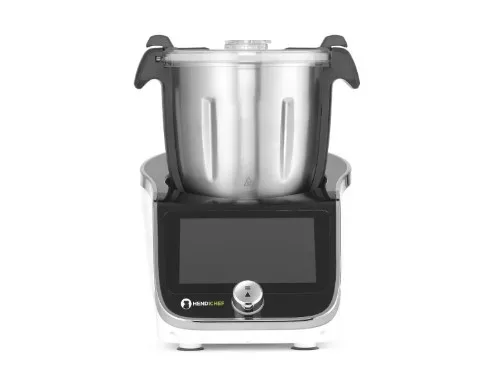
For professional kitchens, the HENDICHEF multifunctional appliance combines blending with several preparation and cooking methods. It handles tasks including crushing, mixing, folding, grating, steaming, braising and sous vide. Manual cooking lets staff set and change parameters during the process, making the appliance relevant to recipes that need active adjustment. Its range suits teams considering how a kitchen blender might support work beyond drinks and smooth blends.
Equipment and tasks
Blending and crushing are useful for purées, soups and sauces, while mixing and folding serve preparations that need ingredients combined. Grating and whipping extend its role across mise en place and finishing tasks. In a kitchen producing varied menu components, these functions can bring several preparation stages into one appliance, from processing a base to preparing a whipped component.
Cooking options include boiling, steaming and braising, alongside sous vide. Manual cooking is relevant when a recipe requires staff to adjust parameters as it progresses. The appliance offers up to 20 functions, giving teams a range of methods to consider against their recipes and workflow. Its value depends on whether those tasks form part of the kitchen’s regular preparation.
Parameters in use
The 4.5 l capacity helps teams plan batch sizes for blended preparations, sauces or soup bases. It gives a practical volume to compare with the amount needed for a service run. The 1.4 kW power rating helps assess the appliance’s electrical demand as part of equipment planning, while its 230 V rating lets staff check the supply at the intended work position.
Dimensions of 210 × 380 × 320 mm, in length, width and height, help assess a countertop or storage position before use. Materials include ABS, PA, PC and 18/8 stainless steel; stainless steel is valued for corrosion resistance and durability in repeated kitchen use. The digital panel presents settings electronically, supporting manual changes to cooking parameters as a preparation develops.
Choosing a product
Start with the work the kitchen needs to do. For a routine focused on purées, soups and sauces, consider how often blending and crushing are required. If the menu also calls for grating, whipping, steaming or braising, compare those tasks with the appliance’s broader function range. Sous vide and manual cooking are relevant where recipes benefit from those methods and staff need to adjust parameters during the process.
Compare the planned batch with the 4.5 l capacity, then check the dimensions against the intended work position. Factor the 230 V supply and 1.4 kW demand into equipment planning. The digital panel matters when staff will change settings during cooking, while the materials and appliance dimensions help assess its place in the kitchen workflow. Choosing around recipes, batch volumes and preparation tasks keeps the decision grounded in day-to-day use.