Hendi Kitchen Cleaning Trolleys
Hendi Kitchen Cleaning Trolleys. Hendi catalogue from SIA La RONDE
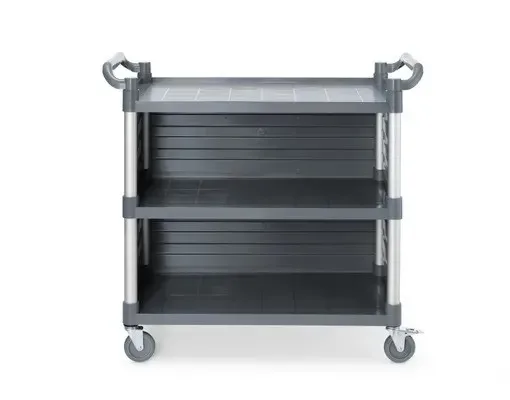
Kitchen cleaning trolleys help teams take supplies and equipment to the work area, keeping the items needed for a cleaning task together in transit. SIA La RONDE’s serving trolley with side panels can support cleaning rounds where staff move between kitchen work zones and need supplies close at hand. Its shelves provide space to organise items for the task, while rounded corners support safer handling as the trolley is used around people and equipment. Consider the route, load and point of use when deciding how it will fit into the kitchen’s cleaning routine.
Equipment and tasks
Use the trolley to bring cleaning materials to a work area and carry them away when the task is complete. Keeping supplies together can reduce repeated trips to collect individual items and help staff maintain a consistent cleaning workflow. The upper shelf is positioned at an ergonomic height for convenient use, so frequently handled items can be kept accessible during the task. Arrange the remaining supplies on the other shelf according to how they will be used, rather than mixing items needed at different stages of the cleaning round.
The trolley is easy to move over uneven surfaces and convenient to use in lifts and narrow corridors. These characteristics are relevant when a cleaning route passes through restricted access or between different areas. Four swivel castors support steering; brakes on two castors help hold the trolley in place when staff are loading or unloading it. The side panels suit moving grouped items around the workplace, while the rounded corners are useful when manoeuvring near people and kitchen equipment.
Parameters in use
The trolley measures 1010 × 500 × 960 mm overall. Use these dimensions to assess the space it takes up along the intended route and where it can be positioned during a task. Each shelf measures 842 × 486 mm, giving staff a practical surface for placing containers and equipment. The 308 mm gap between shelves helps when checking the clearance available for items carried on the lower shelf.
Made from PP, or polypropylene, the trolley uses a lightweight plastic commonly suited to wipe-clean equipment. Staff can include its surfaces in routine cleaning after use. Each shelf has a maximum load capacity of 50 kg, which helps teams plan how to distribute supplies without overloading an individual shelf. These parameters support practical decisions about what to carry together and how to organise the load before beginning a cleaning round.
Choosing a product
Begin by considering the cleaning tasks the trolley needs to support. Identify the supplies staff need to take to each work area and organise them so that commonly used items are easy to reach. Check the route between tasks, including any narrow passages or lift access, and consider where the trolley can stand while staff work. A trolley is most useful when it supports the actual sequence of the cleaning round rather than simply providing extra storage.
Then compare the items being carried with the shelf surface, the clearance between shelves and the capacity of each shelf. Consider how containers will be arranged and whether supplies needed for different stages of the task can be kept organised. The trolley’s overall dimensions can also inform where it can be positioned along the route. Choosing around these practical requirements helps staff move cleaning equipment between work areas and keep supplies accessible while carrying out routine kitchen cleaning.