Hendi Trays
Hendi Trays. Hendi catalogue from SIA La RONDE
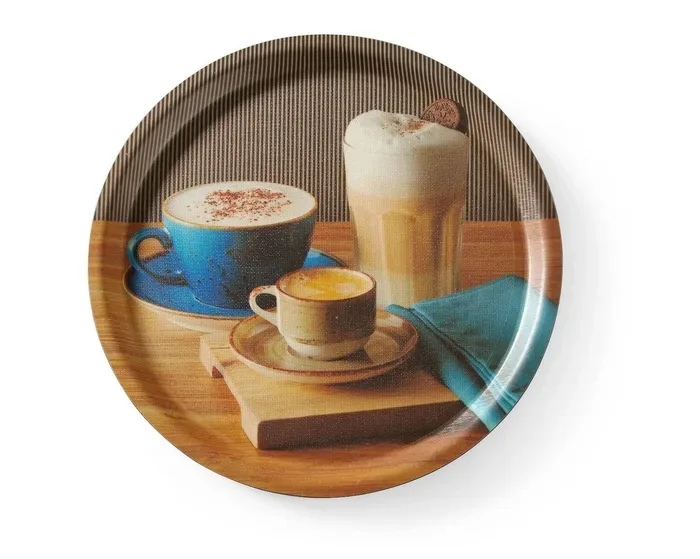
Trays support the movement of food and drink through service, from preparation points to tables and clearing areas. For hospitality teams in the United Kingdom, a round non-slip tray can help keep items together while staff carry them, reducing the need to manage each glass or dish separately. Its defined serving area also makes it easier to plan a load before leaving the counter. The tray covered here is intended for serving work, with surface properties suited to repeated handling and a care limitation that should shape cleaning routines.
Equipment and tasks
Use a serving tray to bring drinks, small plates or condiments to a table in one journey, or to gather used items when clearing. A non-slip surface helps limit movement as a tray is carried, which is useful when staff move between a service point and guests. Loading with a balanced arrangement supports controlled handling: place heavier items towards the centre and keep the load within the available surface rather than stacking pieces where they may shift.
The round format suits work where items are gathered around a central area and staff need access from different sides while loading. It can help with a compact drinks order or a grouped serving, while the team still decides what is appropriate for each trip. In busy service, checking the arrangement before lifting is a simple way to keep glasses and dishes stable and to avoid obstructing the route through the dining area.
Parameters in use
The 380 mm diameter gives the tray a clear footprint for arranging a serving. Staff can use that measurement to judge whether a planned combination of cups, glasses or plates will fit before carrying it, rather than relying on an uncertain estimate. The 15 mm height gives the edge a low profile, so items can be placed on and taken off without negotiating a deep rim. Together, these dimensions make the tray straightforward to load for routine service while leaving the final arrangement to the size and number of items being carried.
Resistance to chemicals, stains and scratches helps the surface withstand regular handling and cleaning and retain its appearance during service use. The tray is not suitable for washing in a dishwasher, so teams should clean it by a suitable method outside the dishwasher cycle. This matters when organising the close-down routine: staff can keep the tray in service rotation while allowing time for the appropriate cleaning and drying process. The non-slip surface also helps limit sliding during carrying, supporting steadier movement with drinks or dishes.
Choosing a product
Choose a tray by matching its serving area and shape to the work it will do. Consider whether staff commonly carry a grouped drinks order, a small collection of dishes, or items for clearing, and whether the round footprint supports that arrangement. The 380 mm diameter provides a practical reference when planning a load, while the low 15 mm edge offers easy access when loading and unloading. Neither measurement determines how much can safely be carried; the items themselves and the staff member’s handling remain important.
Include cleaning practice in the decision. Chemical, stain and scratch resistance is useful for a tray that sees repeated contact and routine cleaning, but it does not make the tray dishwasher-suitable. A team whose workflow depends on dishwasher cycles should account for the required alternative cleaning method before putting it into rotation. For everyday serving, the non-slip surface and round working area support controlled carrying and organised presentation. Keep loads sensible, distribute items evenly and select the tray for tasks that fit its dimensions and care routine.